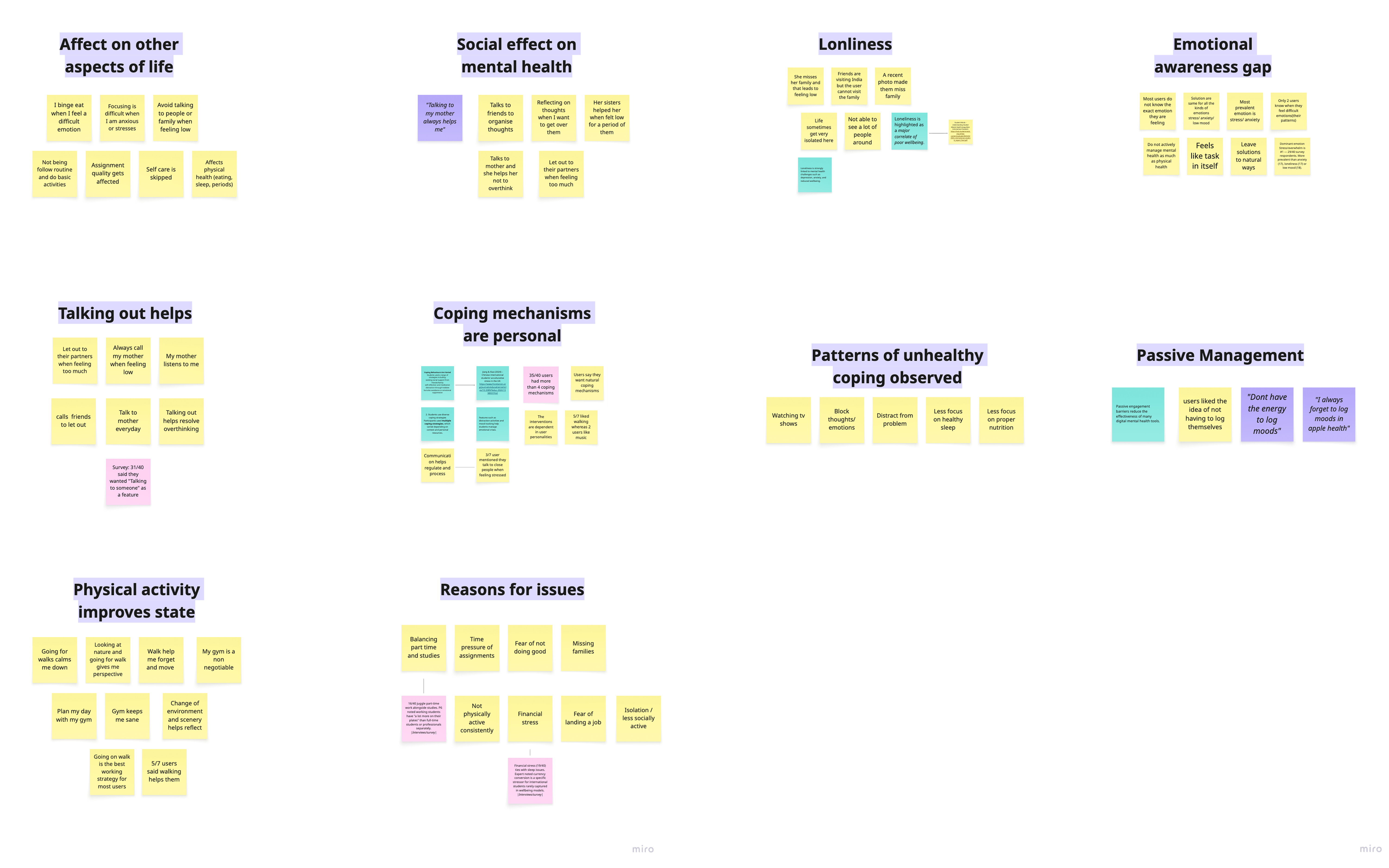

Then I went straight to the people.
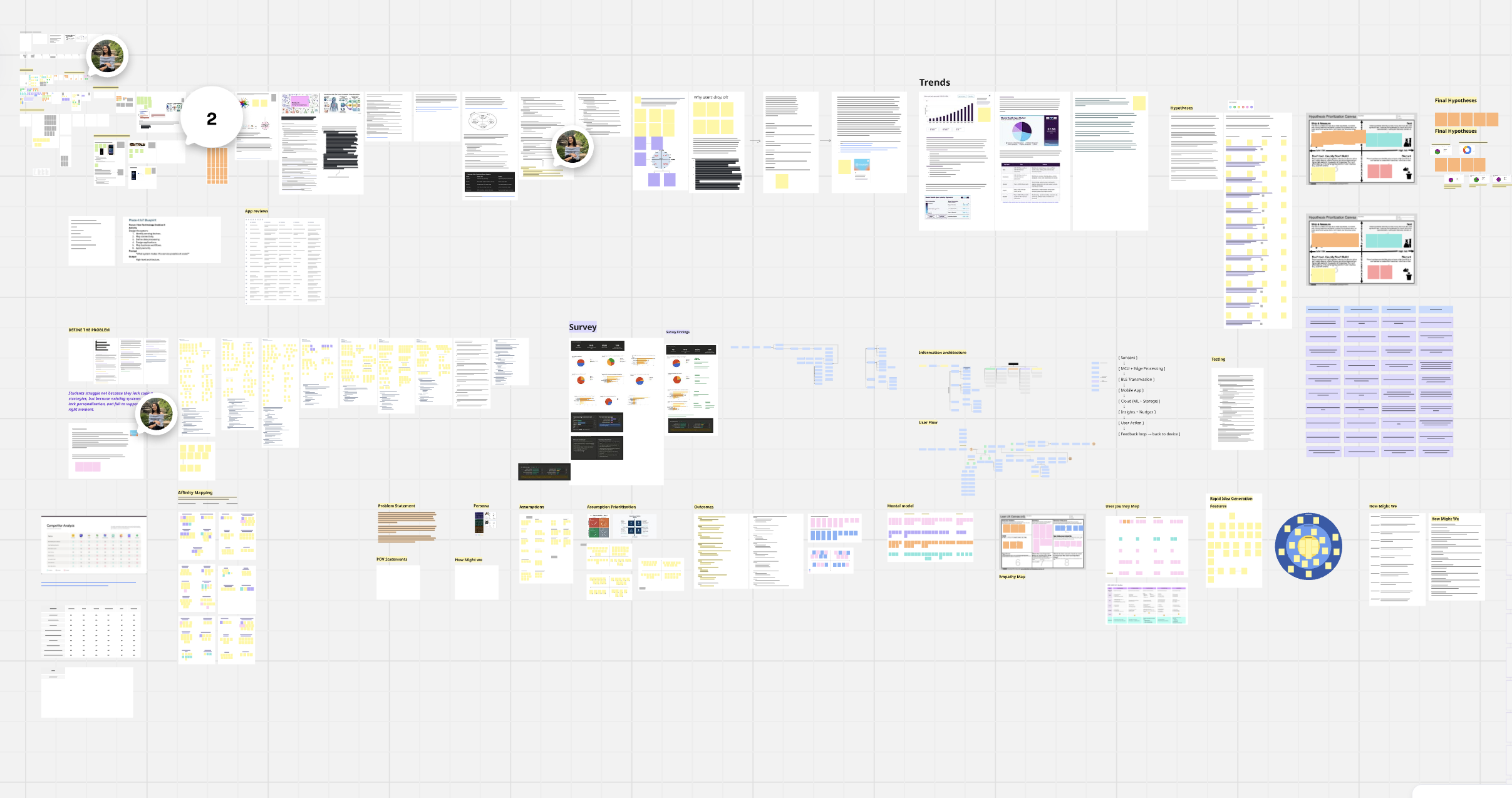
Desk research set the brief; primary research proved it. A survey to size the problem, then eight depth interviews to understand the behaviour underneath the numbers.
Key findings from the survey
What the interviews surfaced, and what each changed
All 8 rejected manual mood logging as impractical, they couldn’t identify their emotional state in the moment.
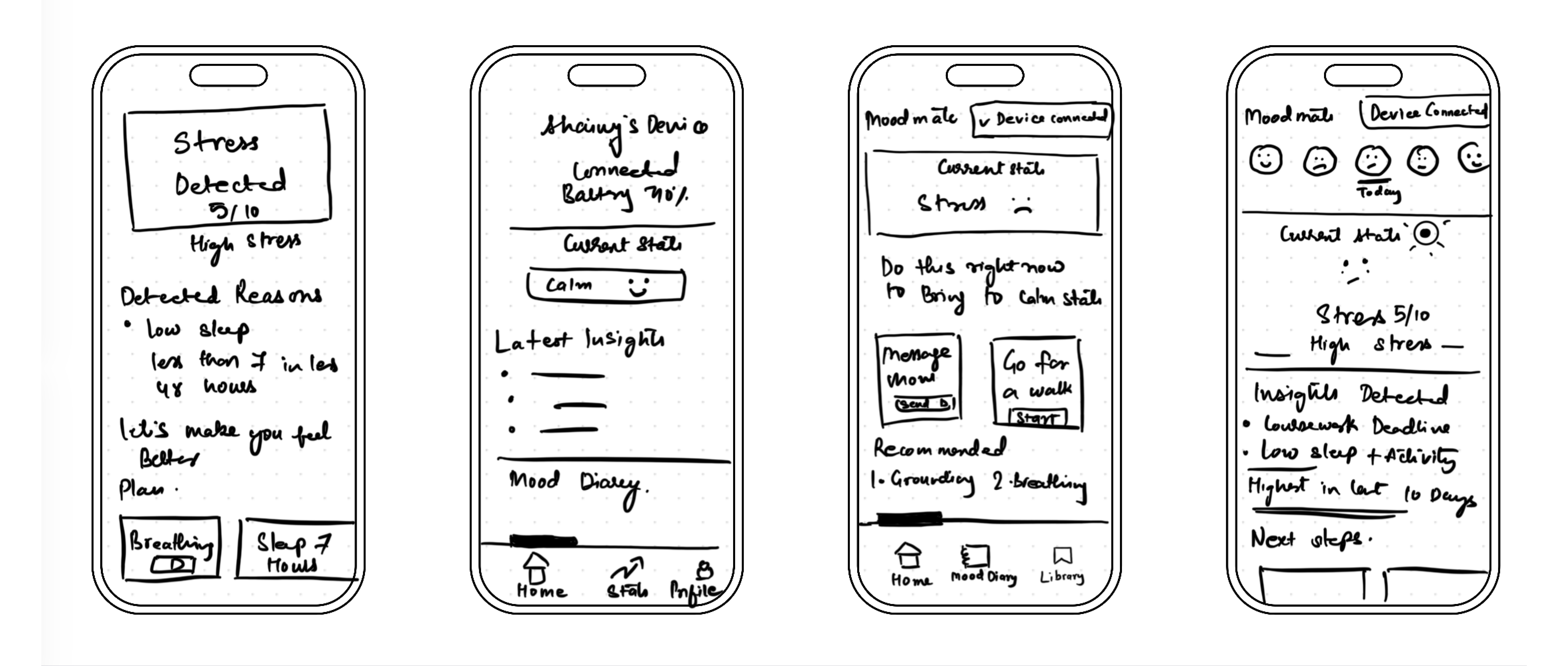
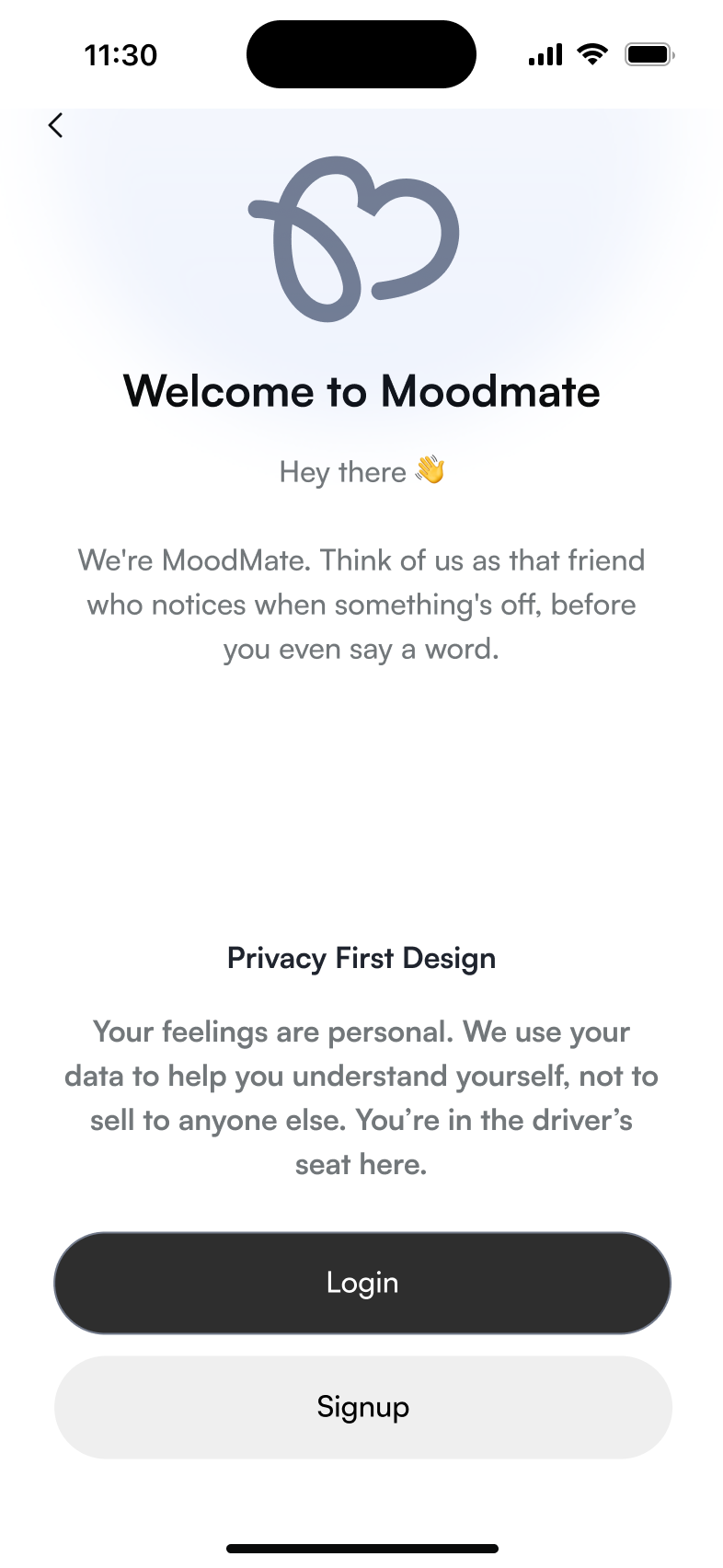
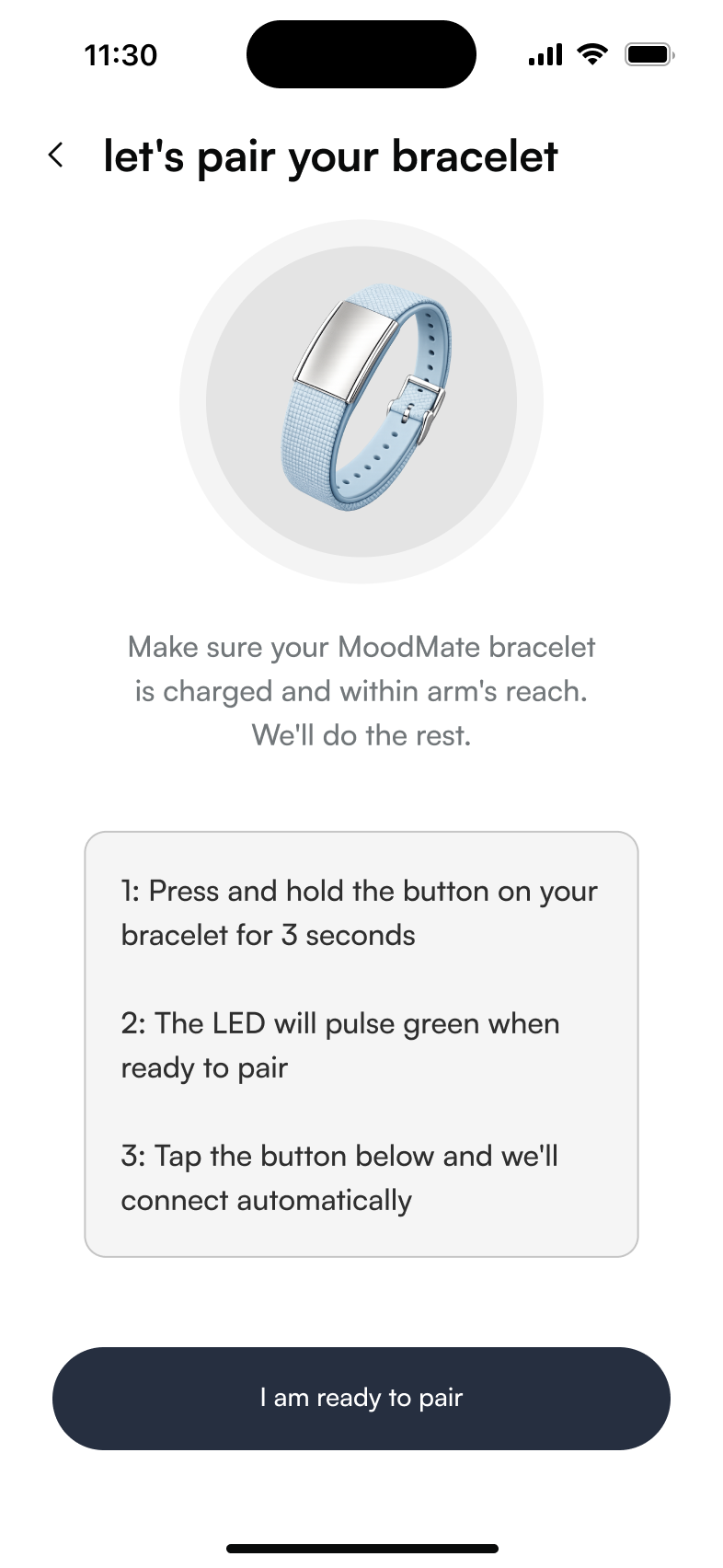
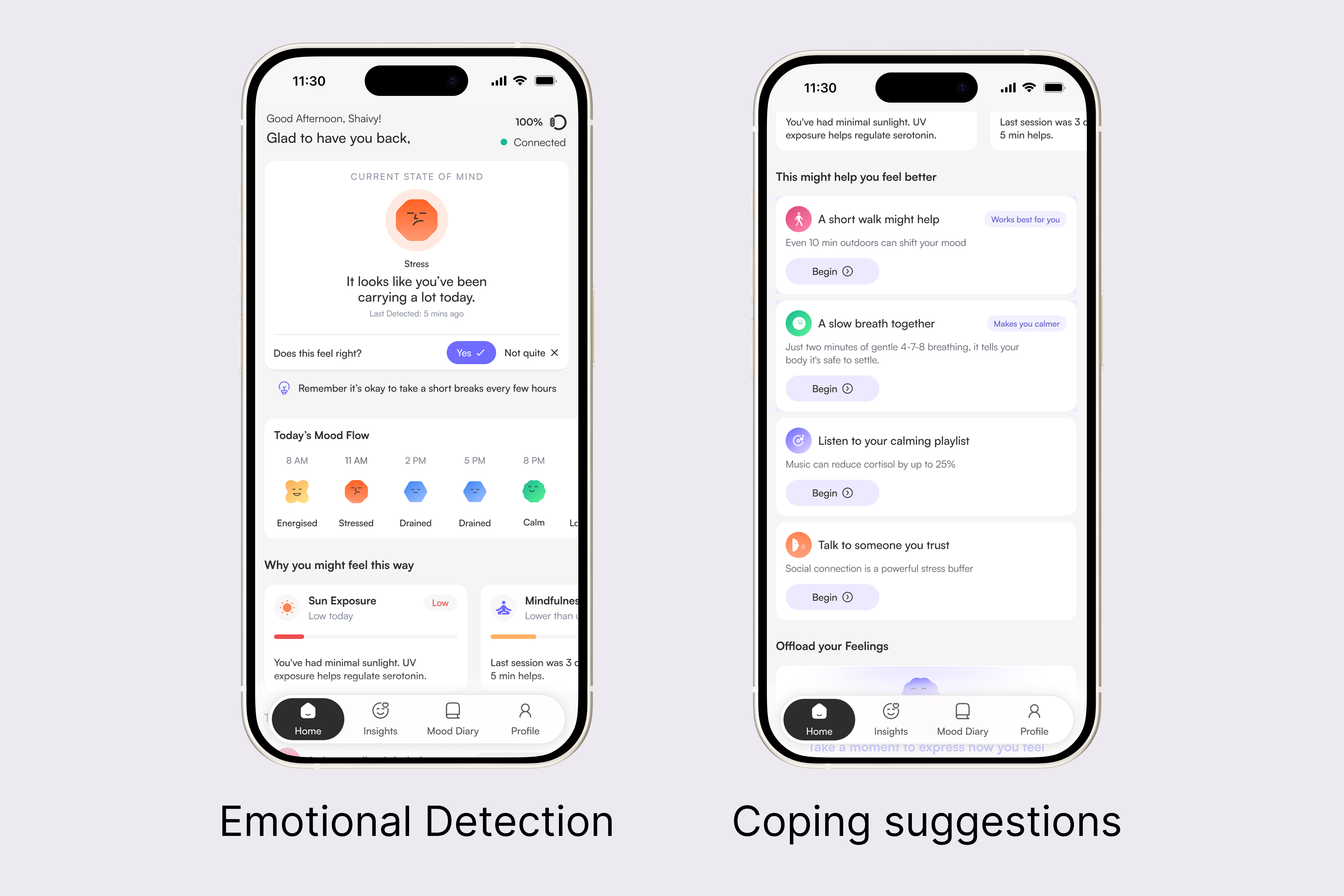
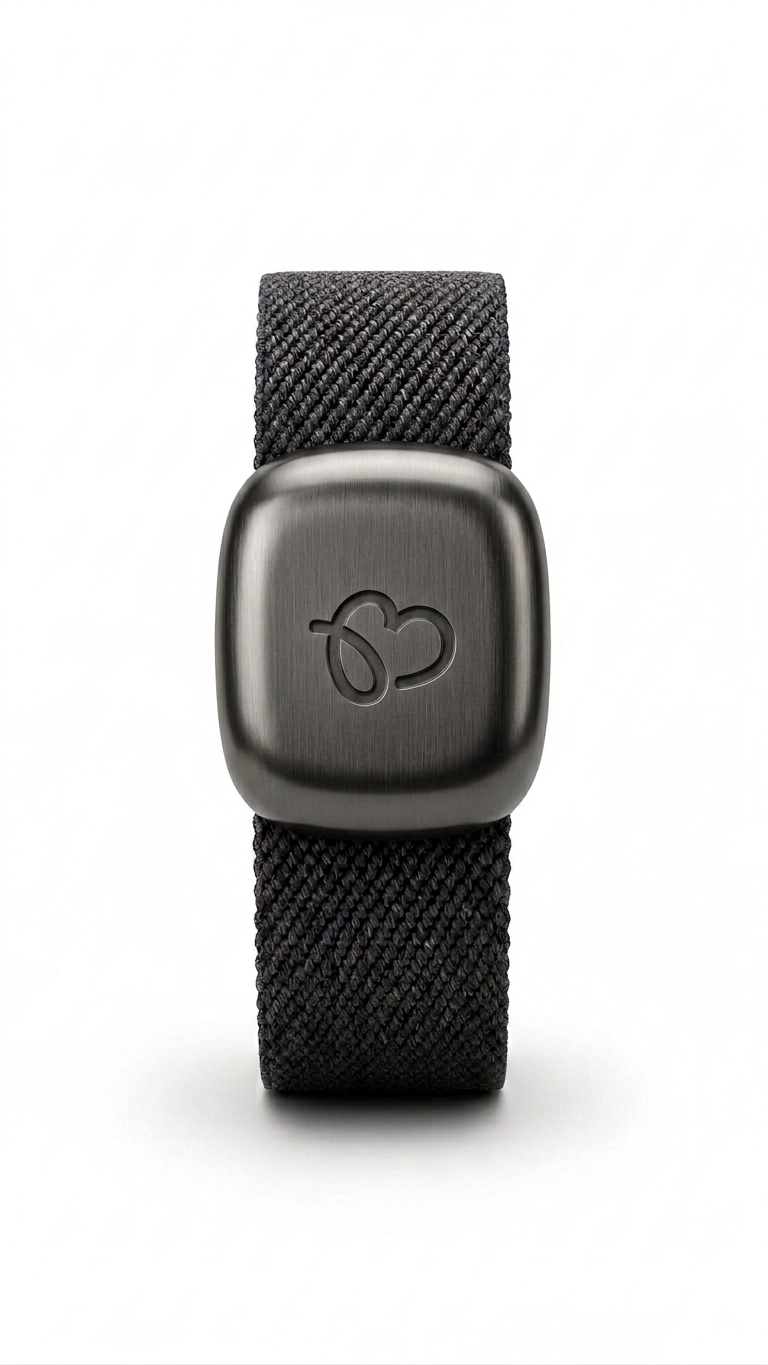
Passive biometric detection became non-negotiable. No logging anywhere in the app, not even optional.
→ Zero mood loggingEmotional suppression was the dominant pattern, pushing feelings aside rather than addressing them.
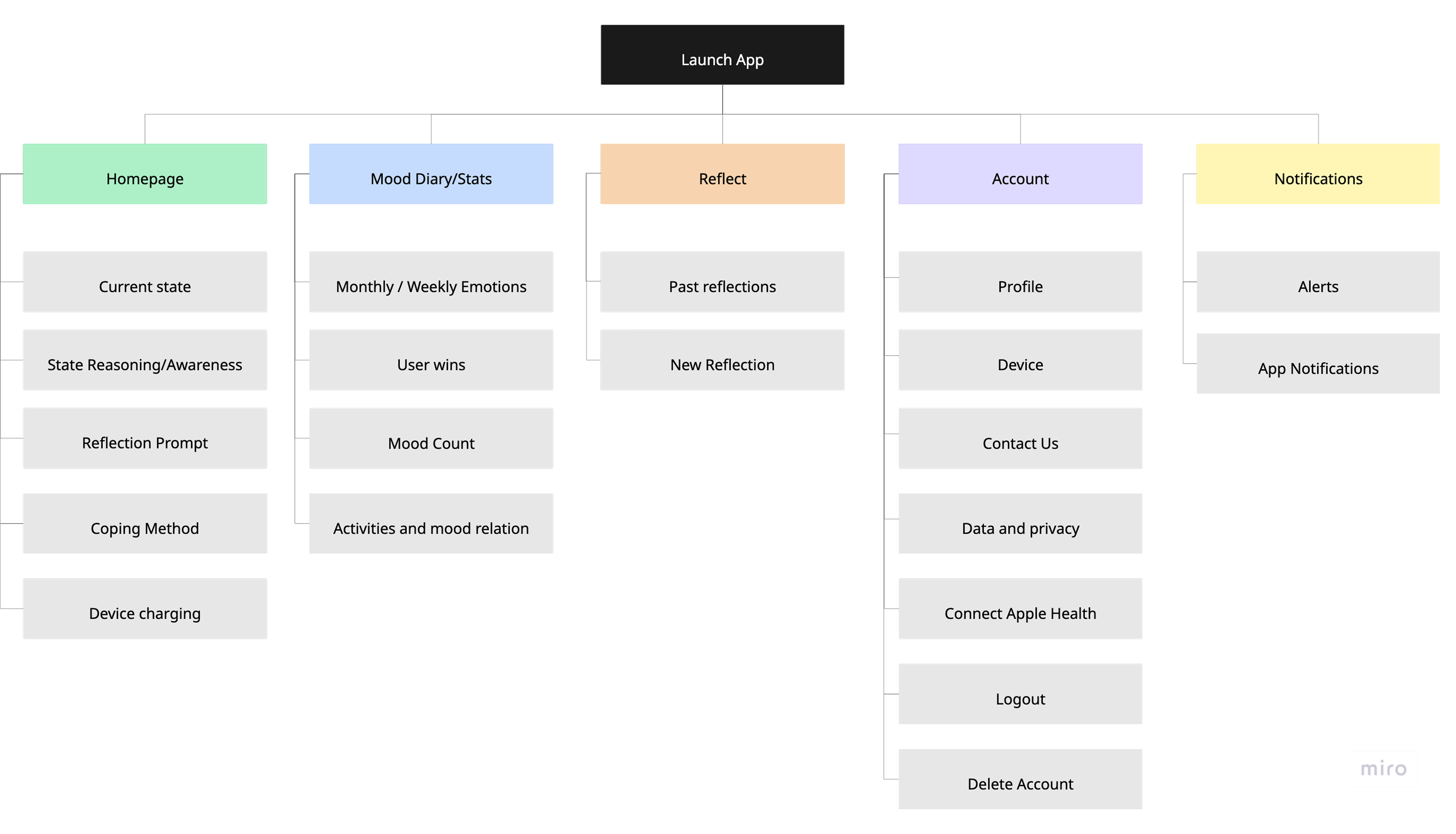
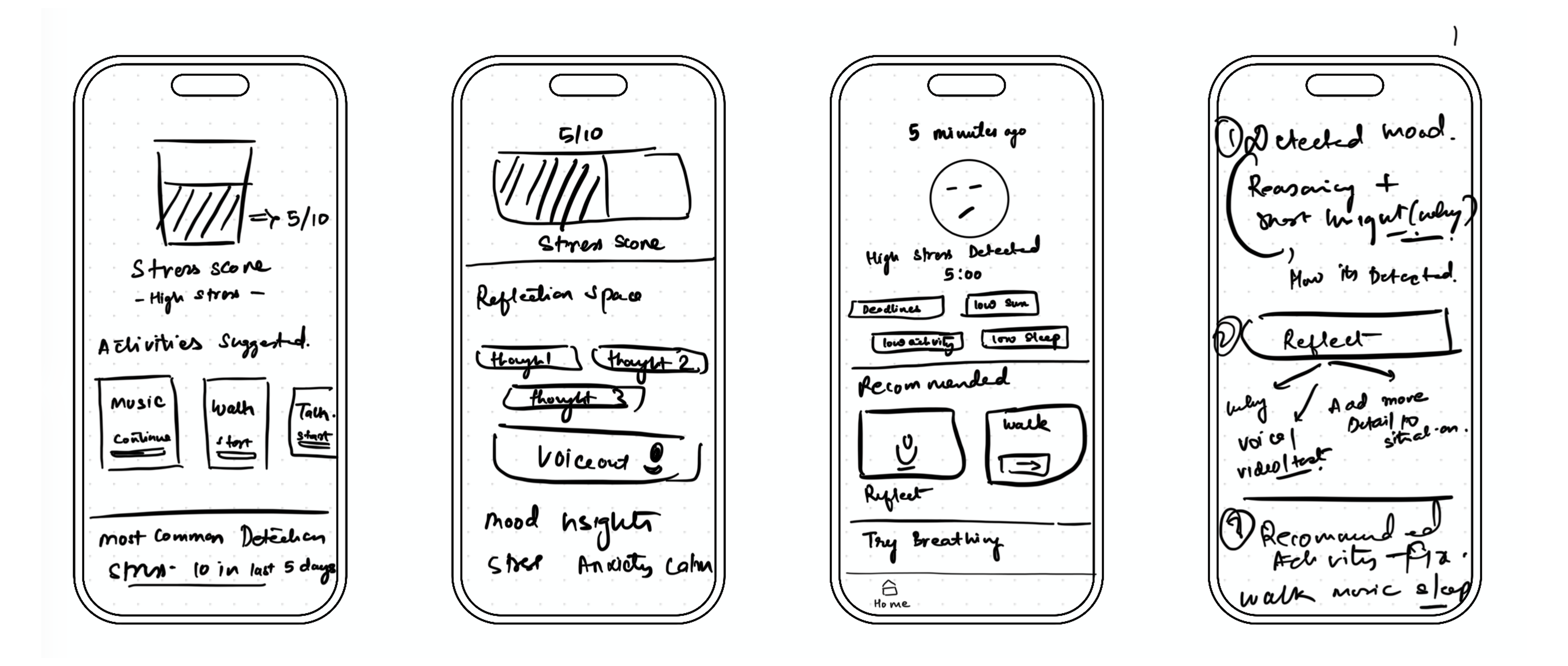
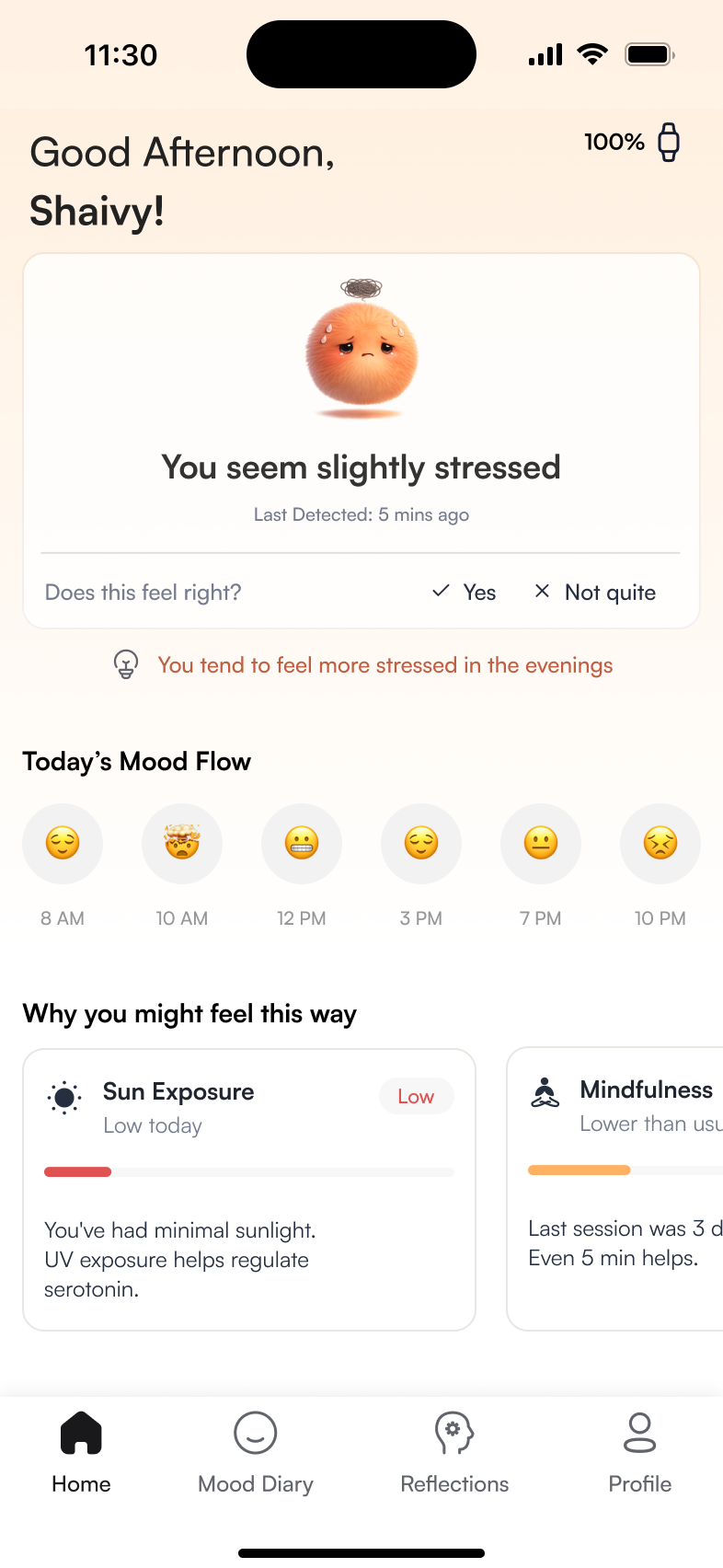
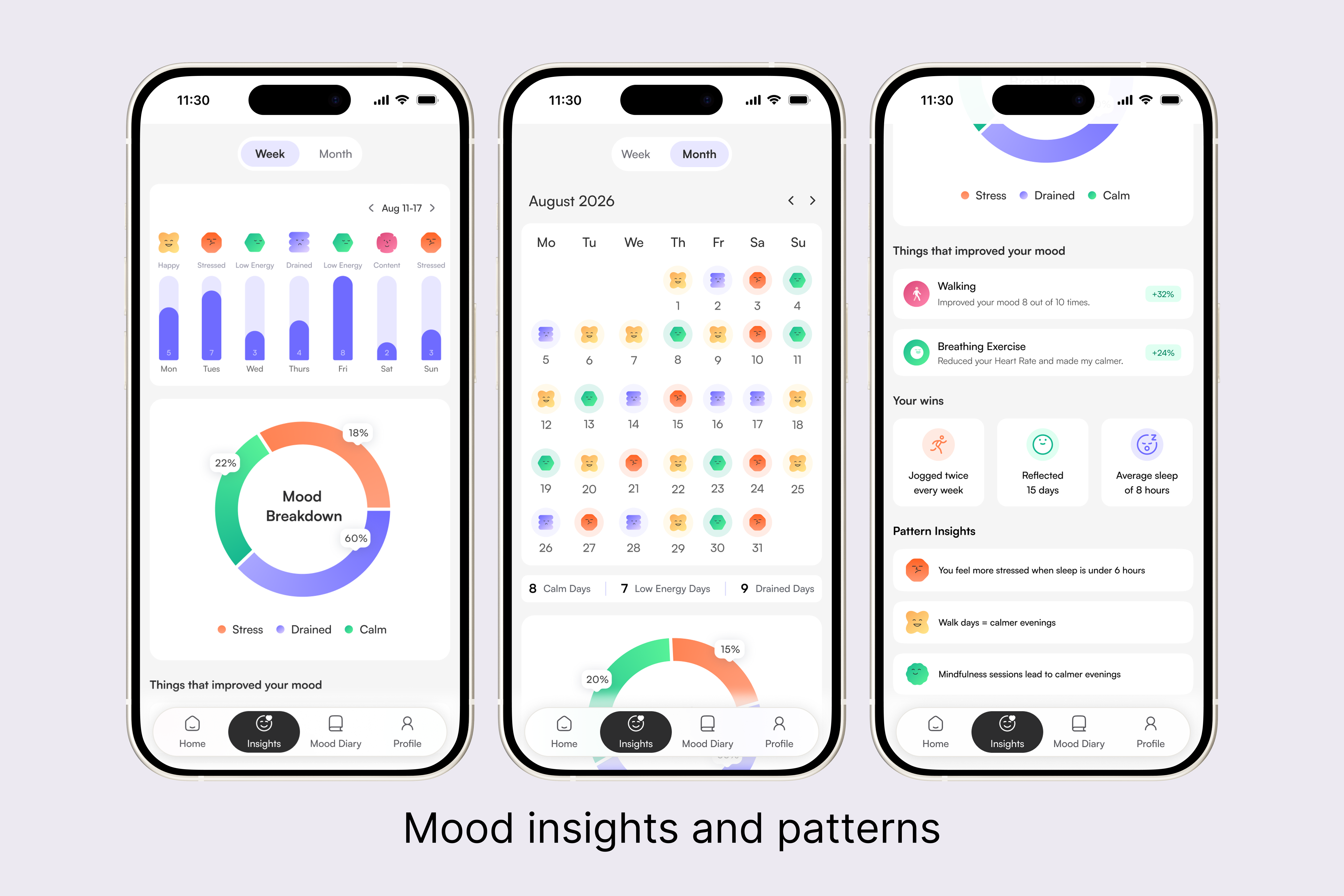
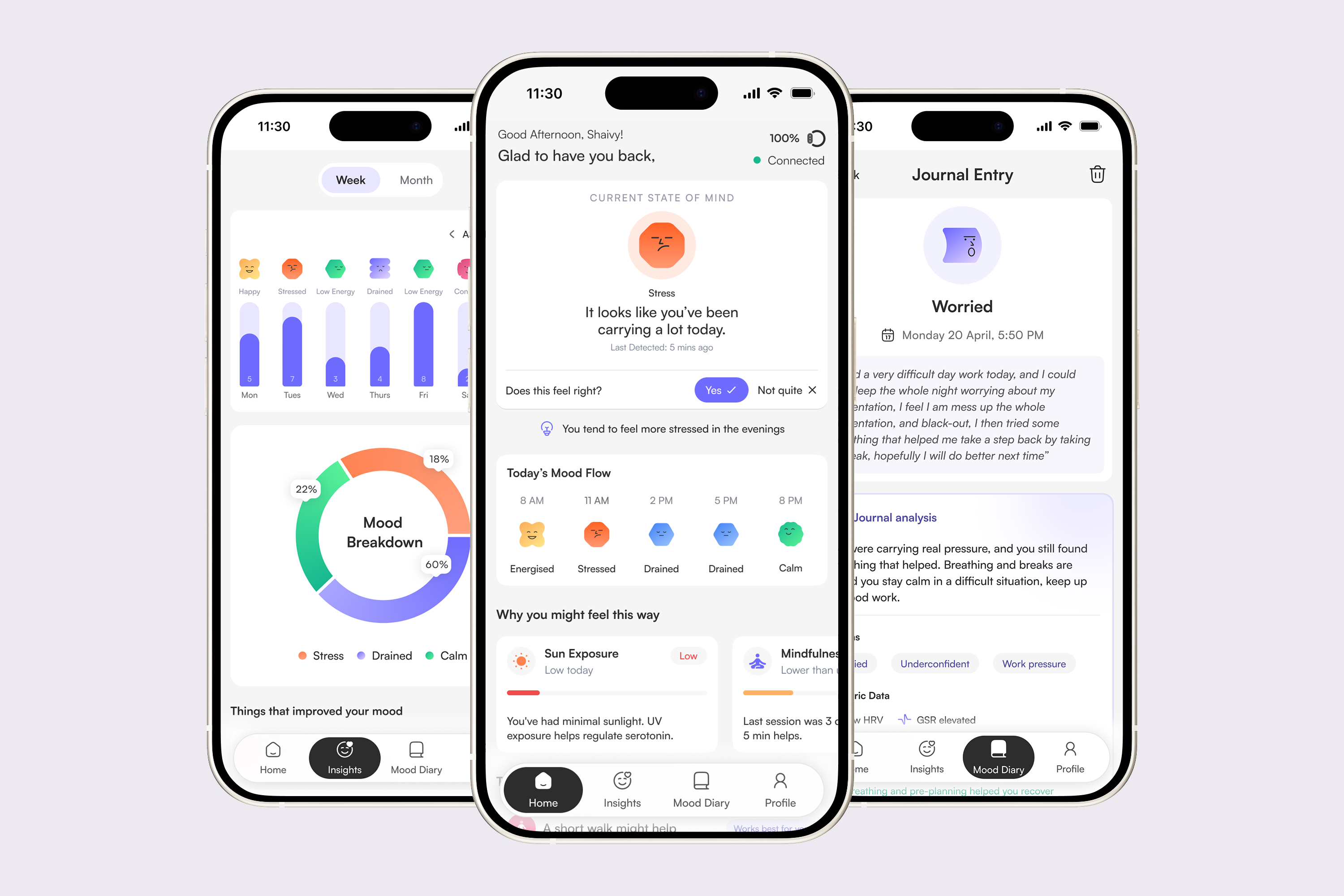
Homepage surfaces the detected state to spark an internal dialogue with the self, then offers directional prompts to address the reasons behind it.
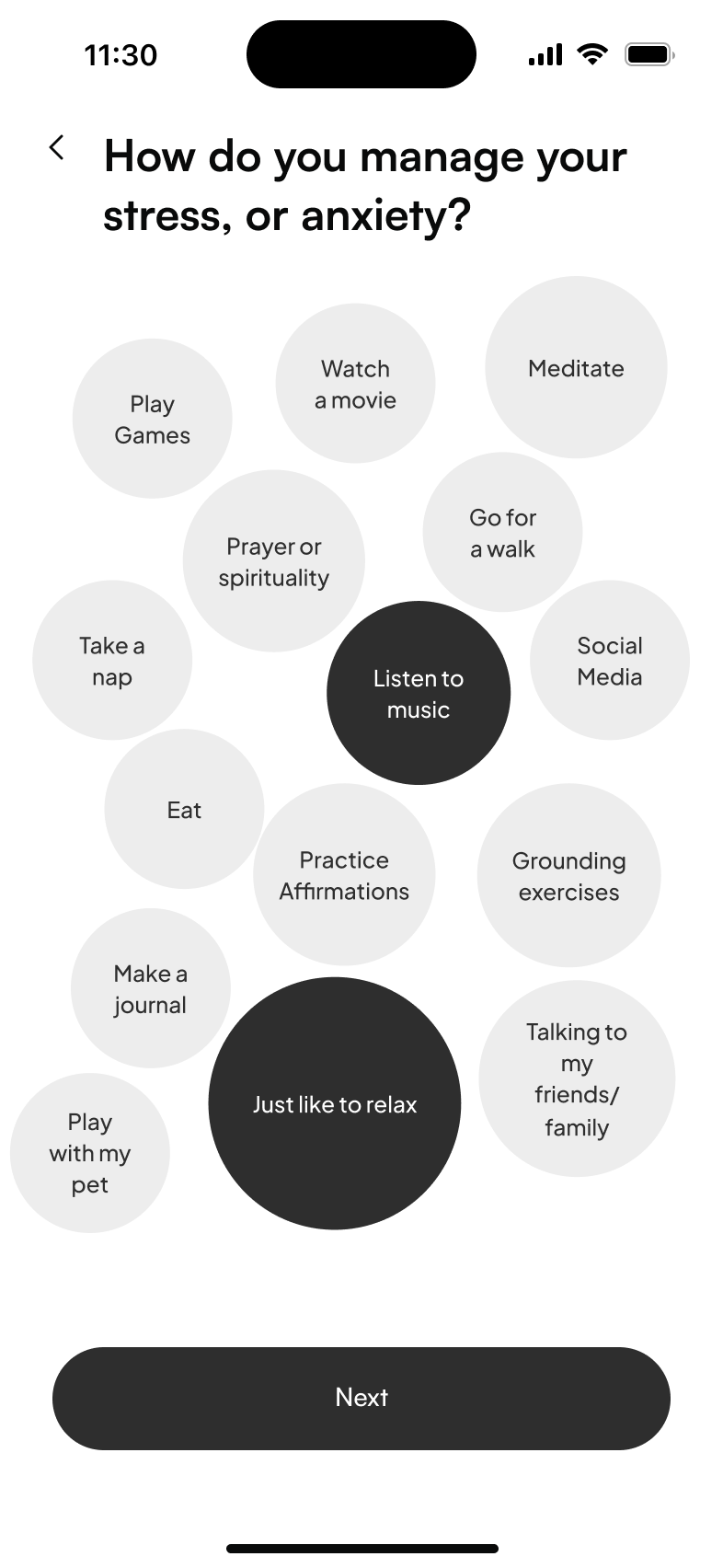
→ Internal dialogue + directional promptsDistraction through entertainment and music dominated coping, but participants knew it wasn’t helping long-term.
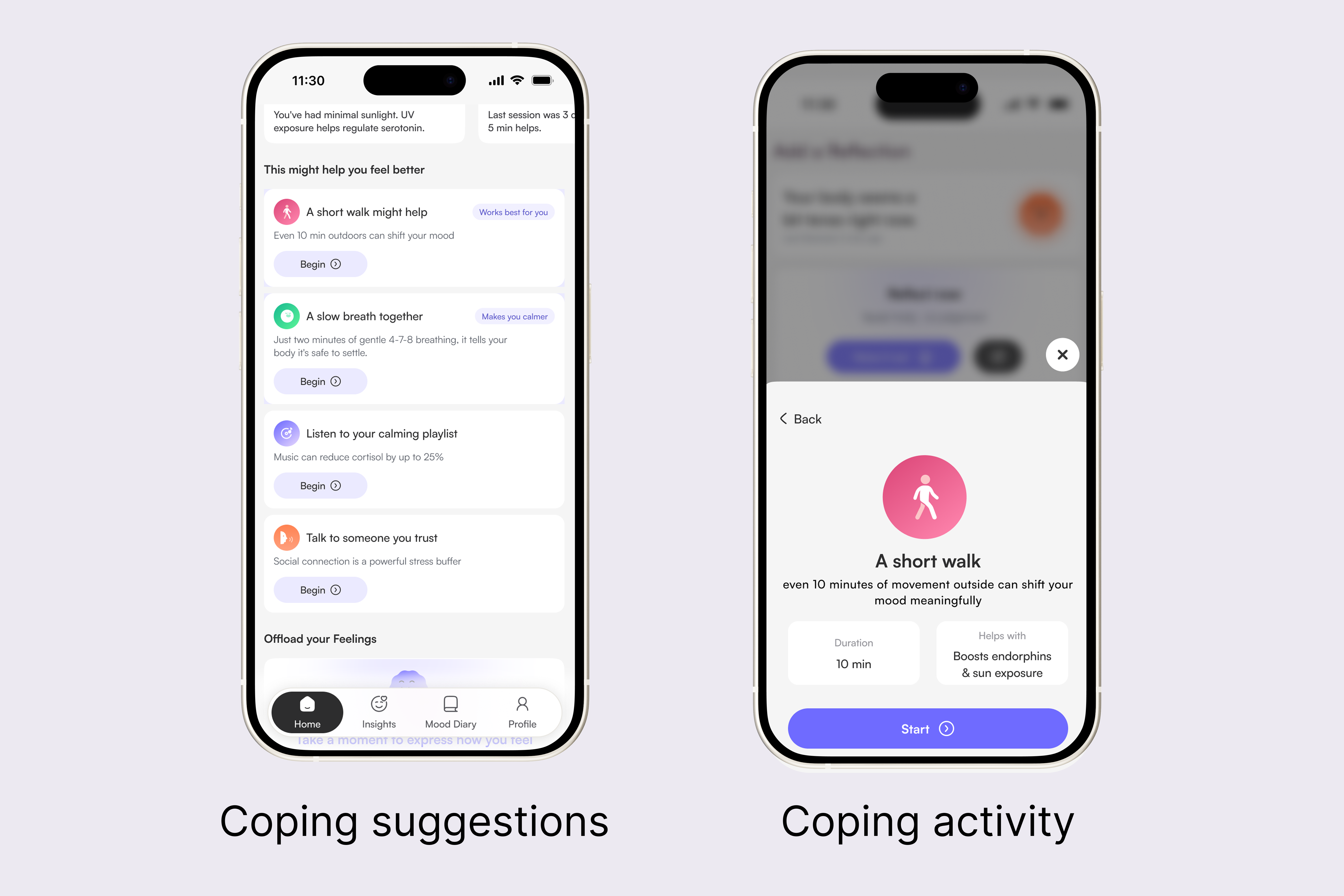
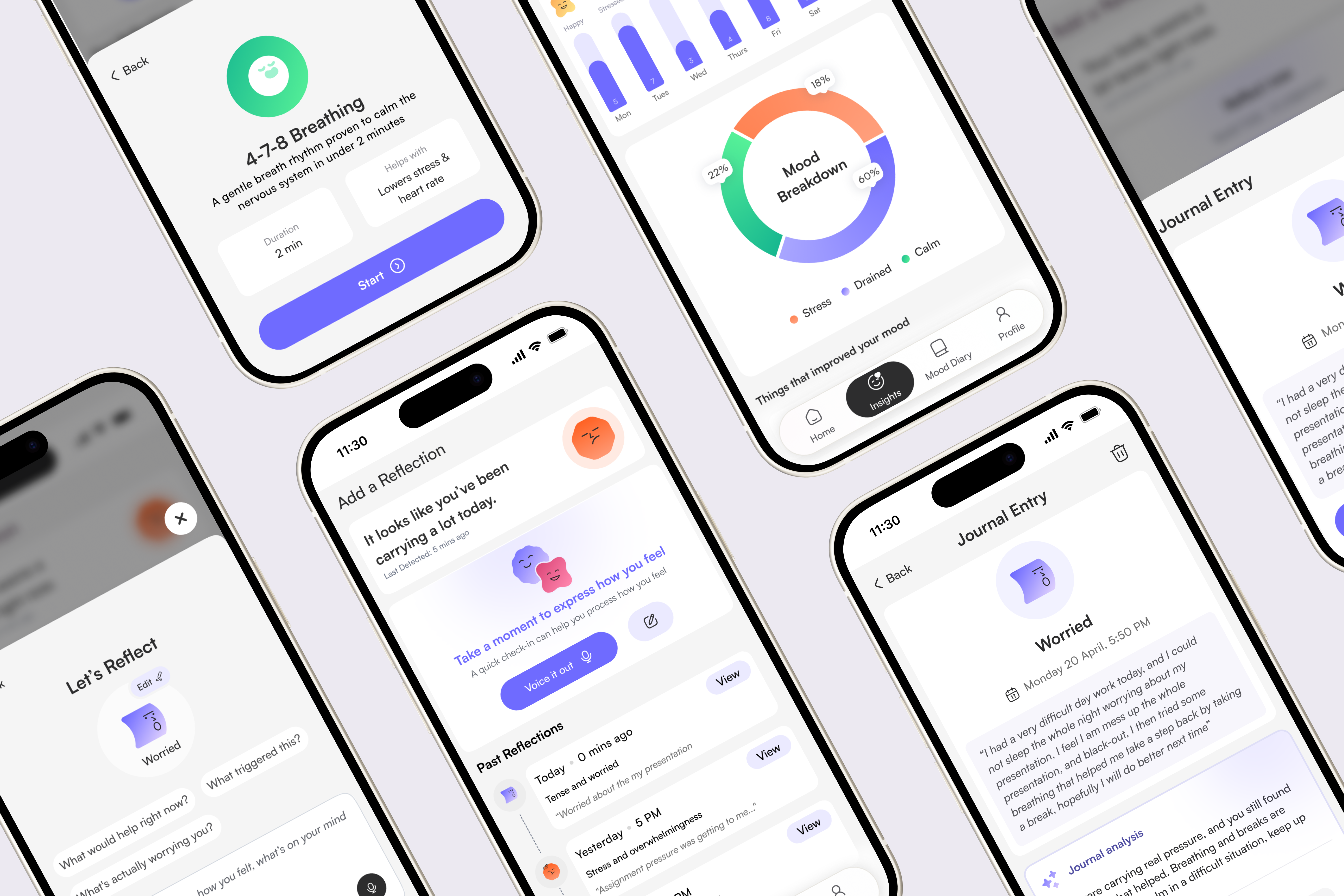
The coping library leads with adaptive strategies (walking, breathing, reflection) and labels why each works, not just what to do.
→ Coping libraryMental-model exercise: users associate emotional processing with talking, “letting it out”, not structured written input.
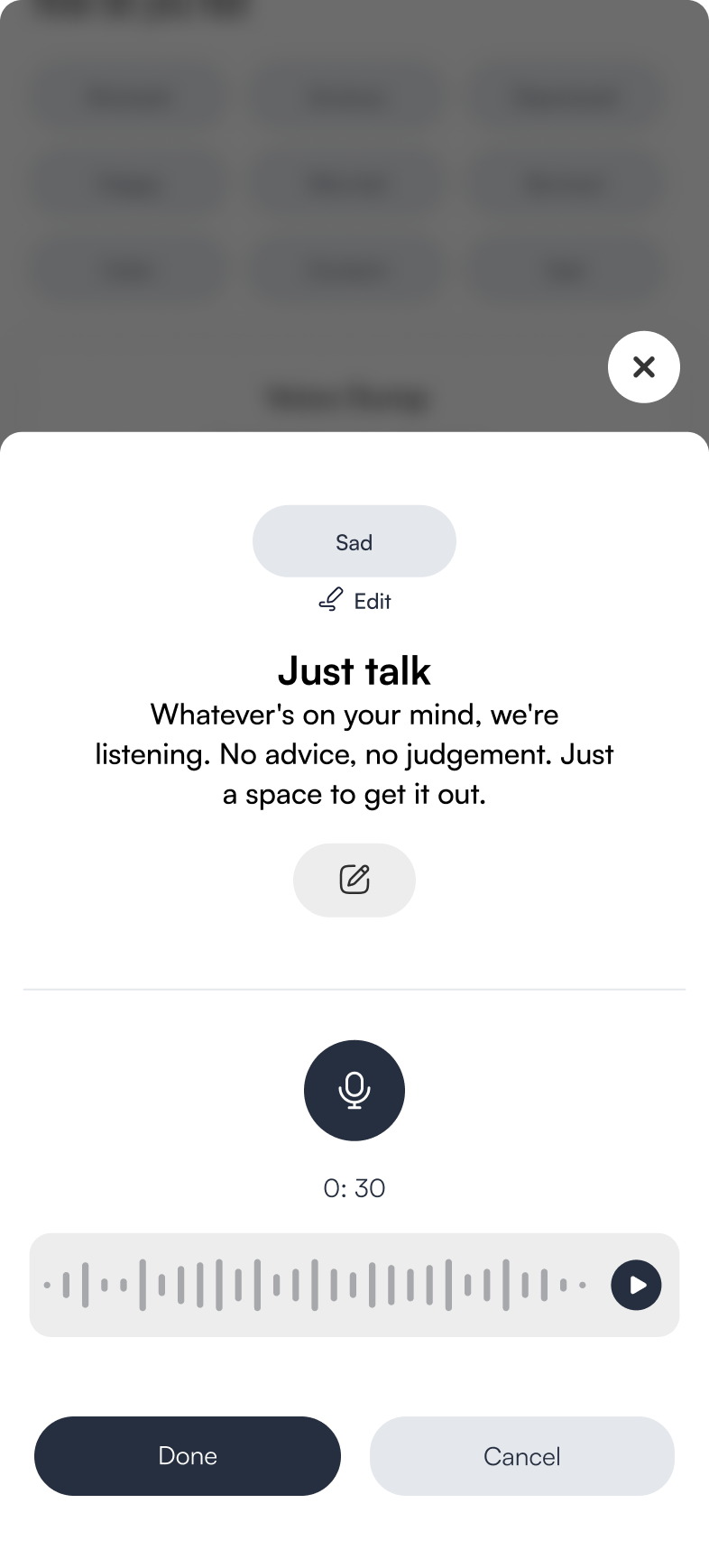
Voice Dump, prompt-guided voice input that processes emotion without requiring written articulation.
→ Voice Dump featureExpert interview findings
Alongside the student interviews, I spoke with a mental-health practitioner to sanity-check the model behind the product.
Emotional numbness was identified as a significant and underdetected warning sign, a state in which students disengage from their feelings entirely, which self-report tools are structurally unable to capture.
The expert emphasised that awareness of one's emotional state is the essential first step toward resolving it; without recognition, no coping strategy can be activated, and distress continues to accumulate beneath the surface.
Voicing emotions aloud was highlighted as a particularly effective form of processing, consistent with CBT theory, which establishes that externalising and articulating a felt experience reduces its intensity, interrupts rumination, and restores a degree of cognitive control, directly informing MoodMate's Voice Dump feature.
The expert described emotional escalation as following a bell-curve pattern: stress builds gradually from a baseline, reaches a peak, and then subsides. Critically, if triggers are identified and intervention is delivered before the peak is reached, the curve can be flattened.
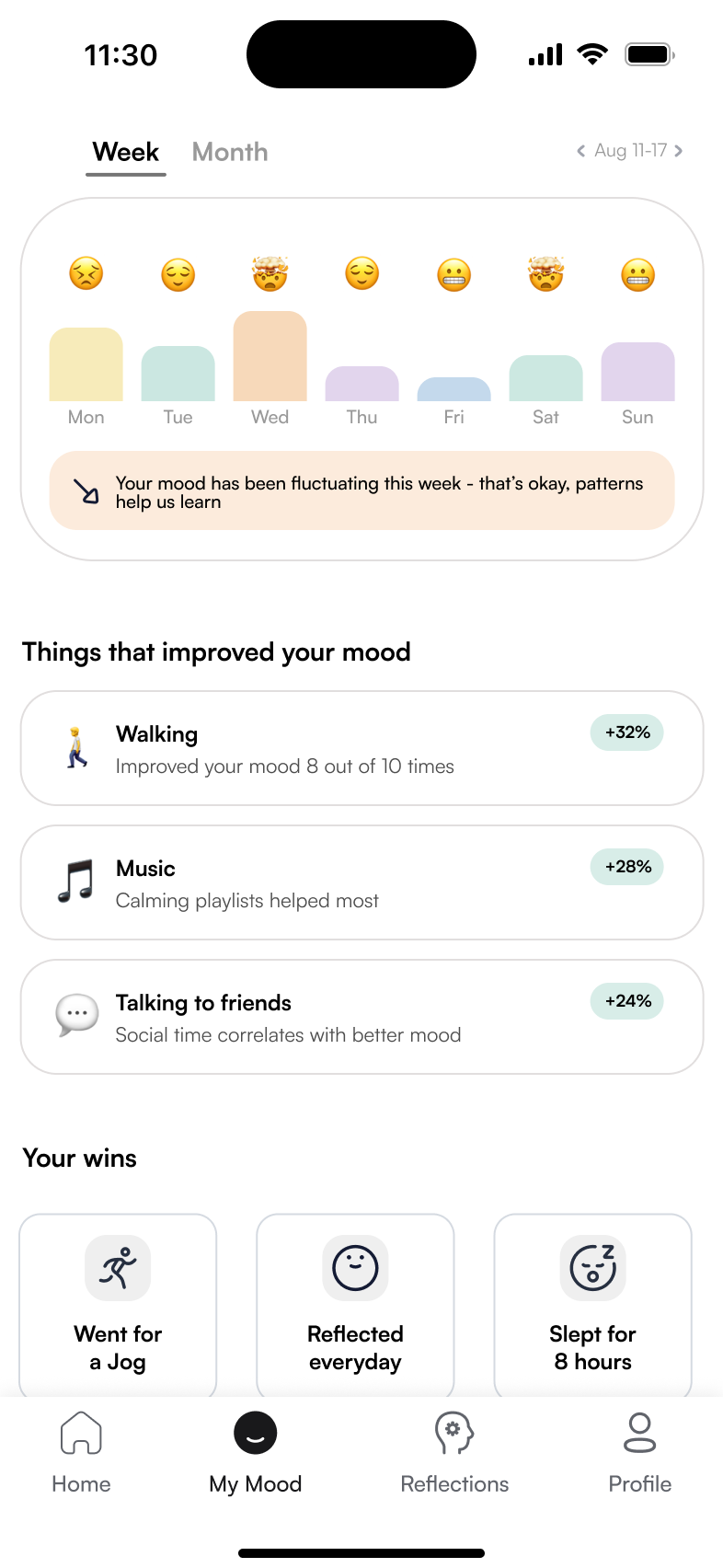
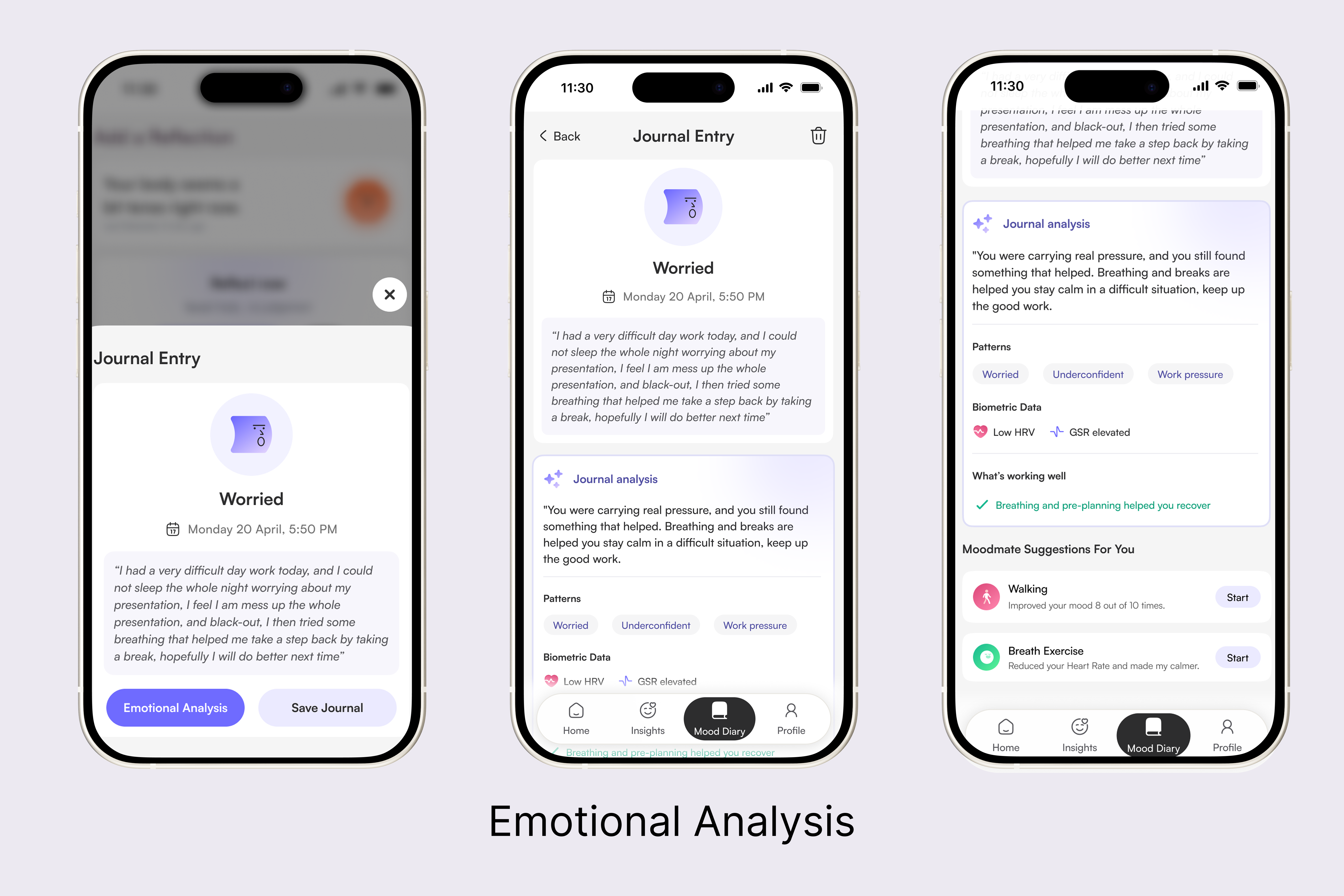
Users wanted a tool that understands them, and gives them a way to reflect and actually see themselves.
Across interviews, people showed a striking lack of self-empathy, quick to dismiss their own feelings. That pointed to a whole surface area of the product: a space designed to help users understand themselves, not just manage a moment.